Hair Shedding Got Your Attention?
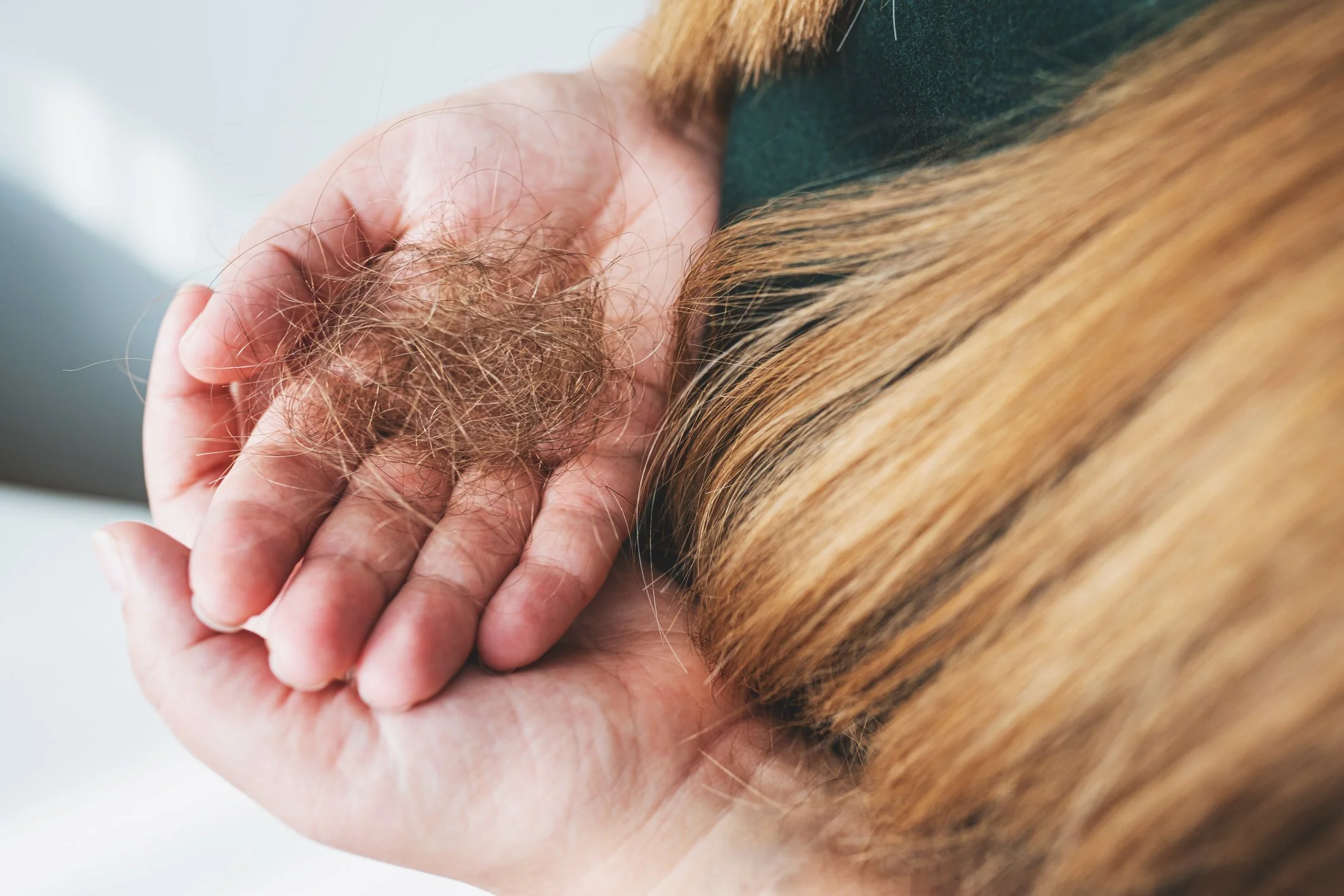
If you are noticing more hair in the shower, a thinner ponytail, or a widening part, you are not alone. I see this concern come up daily, both in my studio and across social media. The problem is that many conversations around hair loss jump straight to supplements and products without ever addressing the real question: why is this happening?
Hair loss, clinically referred to as alopecia, is rarely random. Sometimes it is triggered by a single event, but more often it is the result of multiple stressors accumulating over time. This post is meant to help you slow down and take a quick, informed look at possible contributors before you start guessing or trying to fix it on your own.
This is not a post about quick fixes. It is about understanding the signals your body is sending.
Why Hair Is Often the First Thing to Change
Hair is the second fastest dividing tissue in the body, yet it is metabolically considered non-essential. When the body experiences stress or imbalance, it redirects energy and nutrients to protect vital organs like the brain and heart. Hair growth is one of the first processes to be paused. So to put it into simple terms, our hair is very important to us, but not to our body.
Because of this, hair functions as a powerful warning system. Hair follicles are highly sensitive and often reflect nutritional, hormonal, or metabolic imbalances months and sometimes even years before they show up clearly on lab work or as other symptoms. Elevated stress hormones like cortisol can push hair out of its growth phase and into shedding, while chronic imbalances quietly reduce density over time.
Hair shedding is not betrayal. It is communication. If you are experiencing increased shedding or thinning, you do not need every box checked for hair loss to occur. Sometimes one significant stressor is enough. More often, several smaller ones are working together. So read on to see if any of these possible factors could be contributing to your shedding or thinning hair.
A Quick Hair Shedding Checklist
Stress or Life Changes (2 to 4 Months Prior)
Hair loss related to stress is one of the most misunderstood and underestimated causes of shedding.
Hair loss often shows up well after the trigger, which makes it easy to miss the connection. Consider whether, in the past few months, you have experienced birthing a child, starting or stopping medications, illness, surgery, major emotional stress, weight loss, intense exercise without adequate recovery, or a significant life transition. This type of shedding is often diffuse, meaning it occurs all over the head, rather than in one isolated area.
Stress is also highly individual. For neurodivergent individuals, changes that others may not perceive as significant can have a much larger impact on the nervous system. A common example I see is children being home over the summer and the sudden loss of daily structure. Stress is not defined by how dramatic it looks on paper, but by how your nervous system experiences and processes it.
Chronic stress is also a sneaky challenge. Many people experiencing it would not describe themselves as “stressed” at all. Chronic stress can quietly build over time until the body hits a threshold, and hair is often one of the first external places where breakdown becomes visible. What may feel like a series of small, manageable stressors can quickly become a cumulative load that pushes the body into conservation mode.
Chronic stress is not limited to emotional overwhelm. It includes mental load, physical strain, and ongoing nervous system activation. Common stressors that are often normalized include blurred boundaries between work and home, late-night emails or messages, never fully clocking out mentally, constant availability to others, and running on adrenaline as a baseline. Many people also struggle to rest, play, or relax without guilt.
For some, flexible or blurred boundaries are necessary to manage childcare, work schedules, or caregiving responsibilities. This is not about judgment. It is about awareness. When the nervous system stays in a prolonged state of survival, hair growth is often deprioritized. Hair thrives in a body that feels safe, regulated, and supported, not one that is constantly pushing through.
Protein Intake and Overall Nutrition
Hair is made of keratin, a protein structure. Under-fueling, skipped meals, low protein intake, appetite suppression, or overly restrictive “clean eating” can all signal the body to conserve energy.
Quick protein check (easy math): most adult women need 20–30 grams of protein per meal, eaten 2–3 times per day. Here is a rough estimate of what your intake needs to be for whole-body health, which is age-specific for women, as our bodies shift hormonally as well.
Under 40: 60–75 grams/day
40–60: 75–90 grams/day
60+: 90+ grams/day
Those following vegan, vegetarian, or alternative diets can absolutely support healthy hair, but these approaches require intentional tracking of micronutrients, including protein quality and other essential vitamins and minerals found in traditional meat. Hair does not tolerate long-term or short-term nutritional gaps.
Iron, Ferritin, and Vitamin D Status
Imbalances in our thyroid can often go overlooked. Most annual blood work does not check the full thyroid panel or key . This is one added check I suggest for everyone who has any hair density issues. Especially ferritin, which reflects stored iron, it plays a critical role in hair growth. Lab values that fall within “normal” ranges are not always optimal for hair. Low iron often affects hair long before it shows up as fatigue or weakness. Read on and come back to see my “Hair Shedding Support: Blood Work to Request” for your next doctor’s visit.
Gut Health and Nutrient Absorption
Digestive health directly impacts hair growth. Conditions such as IBS, chronic bloating, constipation, diarrhea, food sensitivities, past gut infections, or frequent antibiotic use can impair nutrient absorption.
In these cases, hair loss may not stem from what you are eating or supplementing, but from your body’s ability to properly absorb and utilize nutrients. Unsure if your digestion is truly “normal”? This quick visual guide from WebMD can help you check.
Signs of Inflammation or Blood Sugar Imbalance
Inflammation is one of the biggest causes of hair shedding after an illness like COVID-19. And inflammation does not always present as pain. It can show up as seasonal allergies, skin rashes, eczema, acne, rosacea, joint stiffness, brain fog, blood sugar crashes, slow healing, or an itchy or sensitive scalp. And those are just a few of the ways our bodies can demonstrate higher levels of inflammation.
Chronic inflammation and insulin resistance can reduce circulation and nutrient delivery to the scalp, directly impacting hair follicles.
Duration and Pattern of Shedding
Sudden, short-term shedding often points to a specific trigger such as illness, surgery, or acute stress. When this is a one-time event and not ongoing, it is typically temporary and will resolve on its own. Time is the primary factor needed for regrowth, though supportive care before known stressors and targeted hair growth systems can help reduce shedding and encourage faster recovery.
Ongoing or recurring shedding usually suggests that multiple systems are involved. This is where hair loss becomes more complex — and where guessing often leads to frustration and delayed progress.
Why Supplements and Topicals Are Not the First Step
Supplements and topical products can be supportive, but without understanding why hair growth was deprioritized, they often act as temporary support rather than a true solution. While many people will see some benefit — especially since most hair growth formulas contain more than just biotin — this does not mean they address what your body specifically needs.
For many, ongoing shedding is a signal that deeper systems require support. Without identifying and addressing the root issue, progress can stall or plateau.
Addressing the underlying cause gives hair the opportunity to naturally re-enter its growth phase and sustain long-term results.
Ready for Personalized Support?
If this checklist raised more questions than answers, that is a good thing. This is where my holistic trichology consultations come in.
During a consultation, we look beyond the scalp to identify likely contributors, connect patterns across your health history, and create a plan that supports your body as a whole. Supplement and topical recommendations are made only when they are truly appropriate for you.
Visit my Hair Loss page to begin the holistic trichology consultation process.
Final Thought
Hair shedding is unsettling, but it is rarely without reason. When you shift from asking how to stop it to understanding what your body is asking for, everything changes.
That is where real healing begins.